Wet areas in Australian homes — bathrooms, showers, laundries and WC compartments — require moisture-resistant plasterboard and appropriate joint treatment. Standard board in direct wet zones risks failure, swelling and mould behind tiles or paint. Building codes and manufacturer warranties both assume correct board selection and sealing at penetrations.
- MR boardBathrooms, laundries, WC compartments
- PenetrationsSealed before tile waterproofing
- RenovationReplace water-affected standard board when walls open
MR board is installed with the same framing and fastening rules as standard board but must not be used where direct water immersion occurs — that's the tile waterproofing system's job. Set compounds in wet zones should suit humidity and not retard drying indefinitely. Penetrations for mixers, spouts and accessories must be sealed before tiling commences.
Canperty coordinates wet area linings with plumbers so board hangs after rough-in but before waterproofing membranes where sequencing demands. We keep cut edges away from shower bases and bath rims. In renovation work we assess whether legacy standard board behind existing tiles should be replaced proactively when walls are opened.
Inspection failures often trace to wrong board type or unsealed penetrations rather than poor setting. Document board type on plans and verify at site before set work hides the specification. For renovation or new build wet area scope in eastern Melbourne, email plans to support@canperty.com.au.
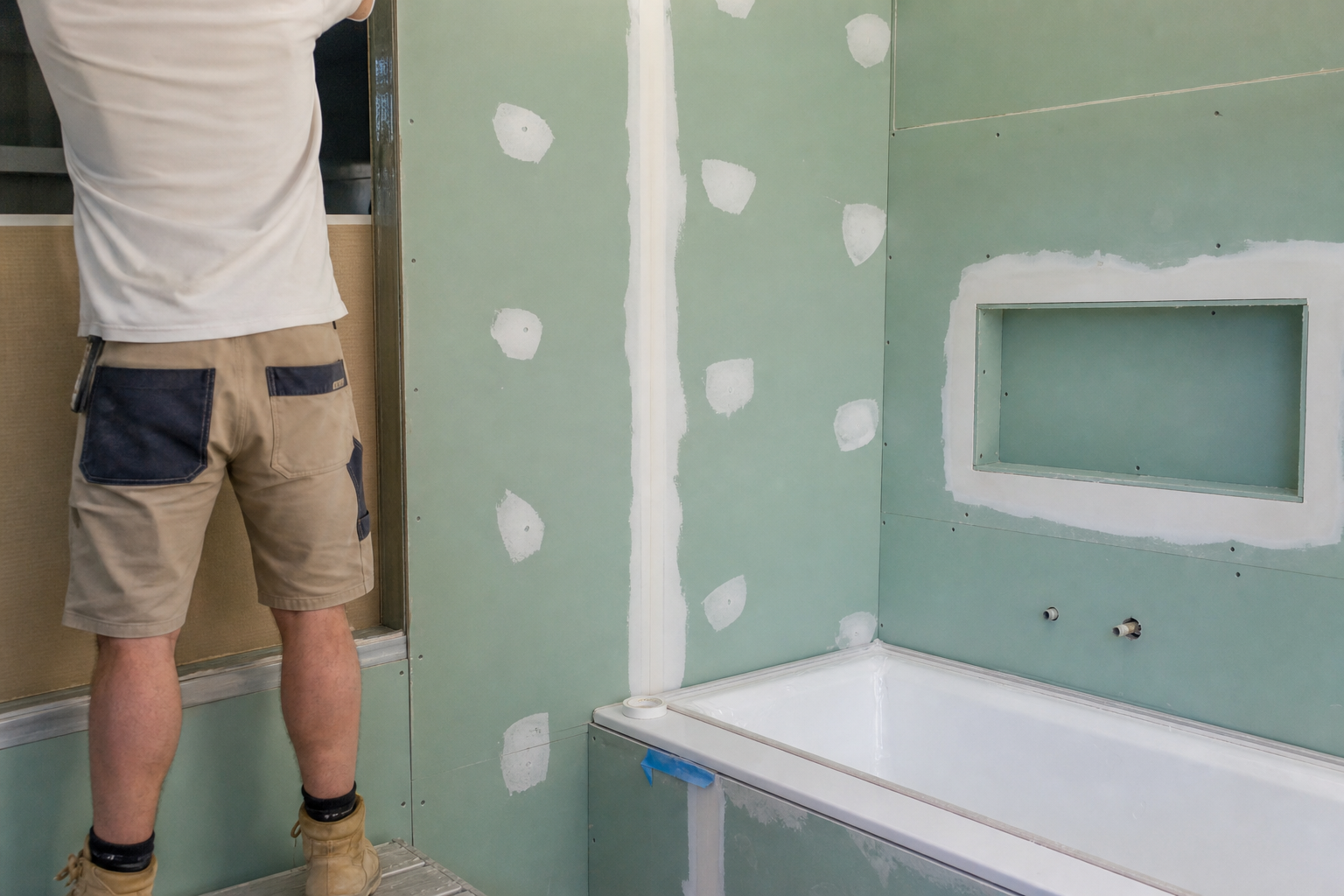
Wet area failure is almost always a system break — board, sealant, or membrane — not one trade in isolation.
Wet areas are a system boundary — board type, set compound, penetration sealant and tile waterproofing are separate trades but one failure chain. Standard board is not hung in shower zones regardless of programme pressure.
Renovation openings expose legacy standard board behind old tiles. When walls are stripped, we recommend replacing water-affected standard board proactively rather than tiling over compromised faces. Partial repairs must extend to sound board edges with moisture testing on timber framing — lining over damp studs transfers liability and guarantees failure.
Set compound selection in humid zones should not trap moisture indefinitely. We allow adequate ventilation during curing and coordinate with tilers on cure times before membrane application. Building surveyors increasingly query wet area board documentation at occupancy — photos during hang are cheap insurance.
NCC and manufacturer literature both assume correct installation, not merely correct product on the invoice. If your bathroom renovation scope is ambiguous between standard and MR zones, resolve it on paper before plaster mobilises.
Frequently Asked Questions
Does MR board replace waterproofing?
No. MR board and sealed penetrations sit upstream of the tile waterproofing membrane. Direct water immersion is the membrane system's responsibility, not the plasterboard alone.
Should standard board be replaced when bathroom tiles are stripped?
Water-affected standard board behind old tiles should be replaced proactively when walls are opened. Partial repairs must extend to sound edges with moisture-tested framing.
Which rooms require MR board?
Bathrooms, showers, laundries and WC compartments per NCC and manufacturer guidance. Standard board in shower zones risks swelling and failure behind tiles.