Ceiling linings, decorative cornices, shadowlines and bulkheads finished for critical light conditions.
Ceilings show every defect under downlights and skylights. AS/NZS 2589 Level 5 is often appropriate in open living areas with raking light even when walls remain at Level 4. We discuss lighting layout early to avoid visible screw lines and joint bands after paint.
- Plasterboard ceiling installation and re-sheeting
- Decorative cornice profiles and junction mouldings
- Bulkheads and dropped ceiling zones
- Downlight and services cut-outs cleaned and edged
- Raked and vaulted ceiling lining
- Level 4/5 set for open-plan and skylit spaces
Scope Detail
Ceiling programmes reference downlight layout before hang. Raked and vaulted spaces include access and scaffold assumptions in the proposal.
Technical Notes
Ceiling planes are judged under downlights, skylights and LED strips that wall surfaces never experience. AS/NZS 2589 Level 5 on ceilings in open-plan living is common even when walls remain Level 4 — the cost of ceiling-only Level 5 is modest compared with whole-room premium finish. We review lighting layouts with electricians before board hang so fasteners and joints avoid critical beam paths.
New ceiling linings over timber joists or steel furring demand level framing or packers. A waved frame produces a waved ceiling regardless of compound skill. We report out-of-plane joists to builders before sheet fix. Re-sheeting over failed older ceilings requires screw length and spacing suited to support spacing — not simply fixing through failed board into unknown substrate.
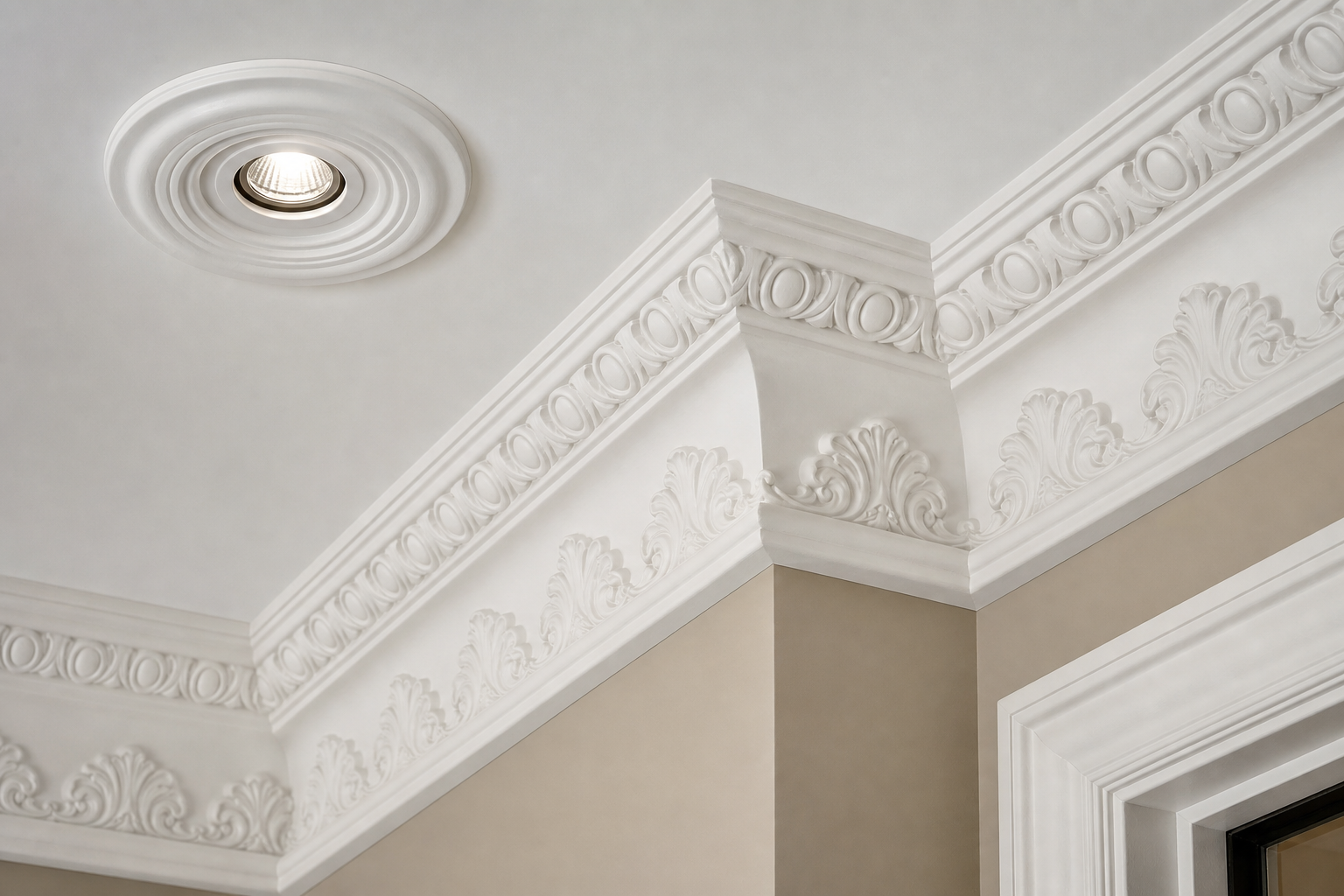
Cornice selection affects perceived quality as much as wall flatness. Square set junctions suit contemporary minimal interiors; profiled cornices soften transitions in traditional homes. We install supplied profiles with consistent mitres at bay windows and bulkhead returns. Shadowline details require precise board edge alignment — gaps are unforgiving after paint.
Bulkheads for services, curtains and kitchen cabinetry need set surfaces that meet adjacent walls without step shadows. Raked and vaulted ceilings increase joint length and sanding difficulty; we price accordingly and protect finished lower walls during ceiling sand with temporary screening.
Downlight cut-outs are cleaned and edge-coated so painters do not discover frayed paper faces at primer stage. Services penetrations for supply and return air are sealed against air leakage where specifications require. In commercial ceilings we coordinate grid layouts with mechanical drawings before first fix.
Send ceiling plans to support@canperty.com.au with downlight layout and services in ceiling void noted. Raked ceilings and vaulted spaces need scaffold or platform plans early — access cost is part of honest quoting.
Frequently Asked Questions
Why is Level 5 common on ceilings only?
Downlights and skylights create raking light that exposes joint bands on ceilings more than walls. Level 5 on open-plan ceilings with Level 4 walls is a cost-effective compromise under AS/NZS 2589.
Can raked and vaulted ceilings be lined in plasterboard?
Yes, with framing plane verified before sheet fix and access/scaffold cost identified on the quote. Joint length and sanding difficulty increase with raked geometry.
What cornice profiles do you install?
We install builder- or client-supplied profiles with consistent mitres at bays and bulkhead returns. Square-set junctions require precise board edge alignment — gaps are unforgiving after paint.
How are bulkheads at kitchens and services set?
Bulkheads are set flush to adjacent walls and ceilings per shop drawings or builder set-out. Misalignment at bulkhead returns shows permanently under downlights.
Do you re-sheet failed older ceilings?
Failed ceiling board is removed to sound substrate with screw length matched to support spacing. Out-of-plane joists are reported before fix — waved framing produces waved ceilings regardless of compound skill.